

All the Arthur
Gawain, Firelord, and The Warlord Chronicles

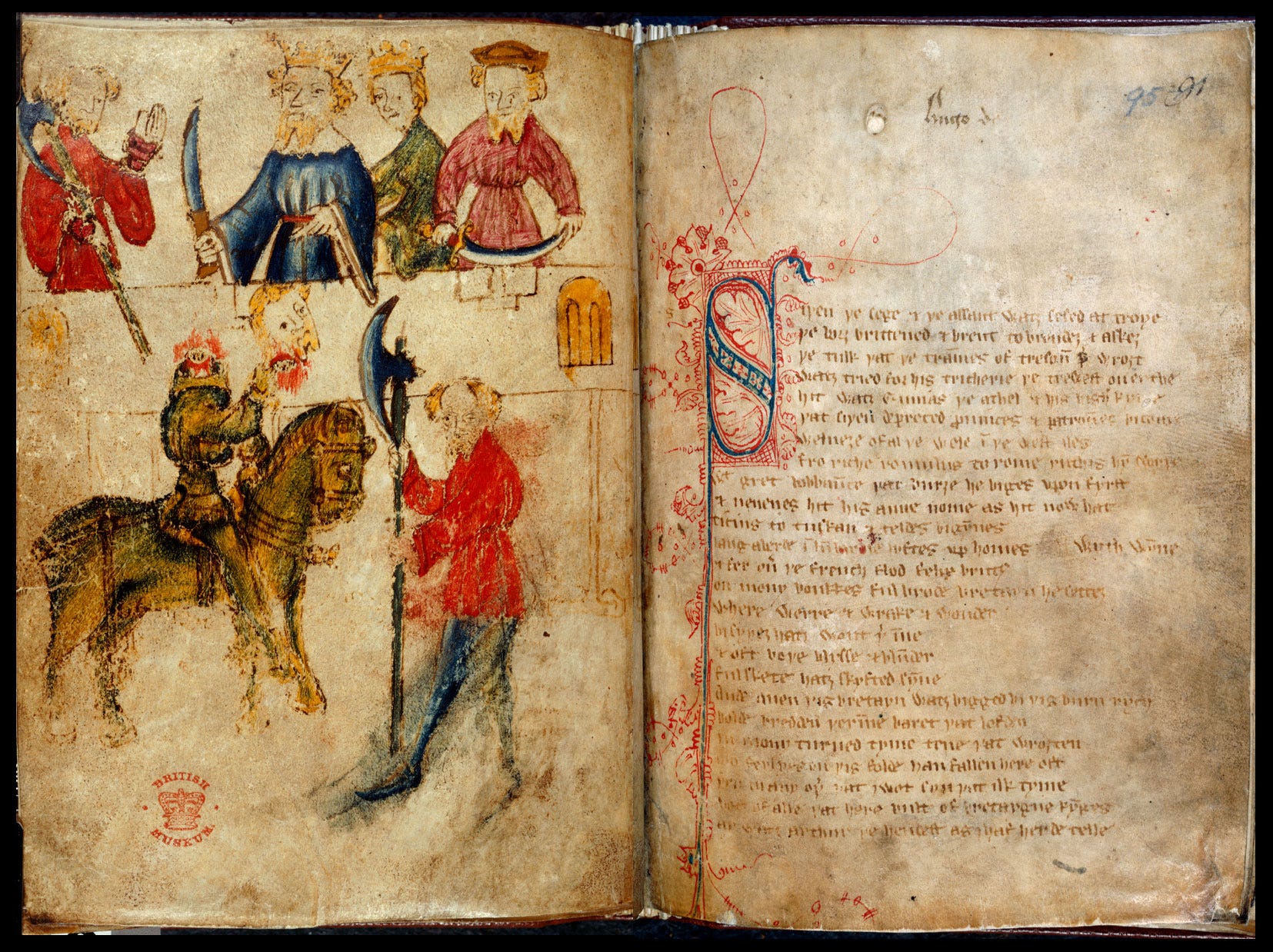

In late April, Rabbit Room Press released Galahad and The Grail, the first of what will be a four-volume Arthuriad by poet and priest Malcolm Guite. Written in the form of an English ballad, it is, I believe, the first epic Arthurian poem in English since Alfred, Lord Tennyson completed his Idylls of the King in 1885. It is also beautifully illustrated by Stephen Crotts.
I was impatient to be in King Arthur’s world, so, in January, I began reading other Arthur books. I’ve read eight so far, not including Galahad and the Grail. And I’m still going strong. The journey may culminate in an essay about reading King Arthur as an American. For now I’m just having fun and I want to share some favorites with you.
Today: two translations of Sir Gawain & The Green Knight, Bernard Cornwell’s Warlord Chronicles, and an unforgettable novel you’ve (probably) never heard of.
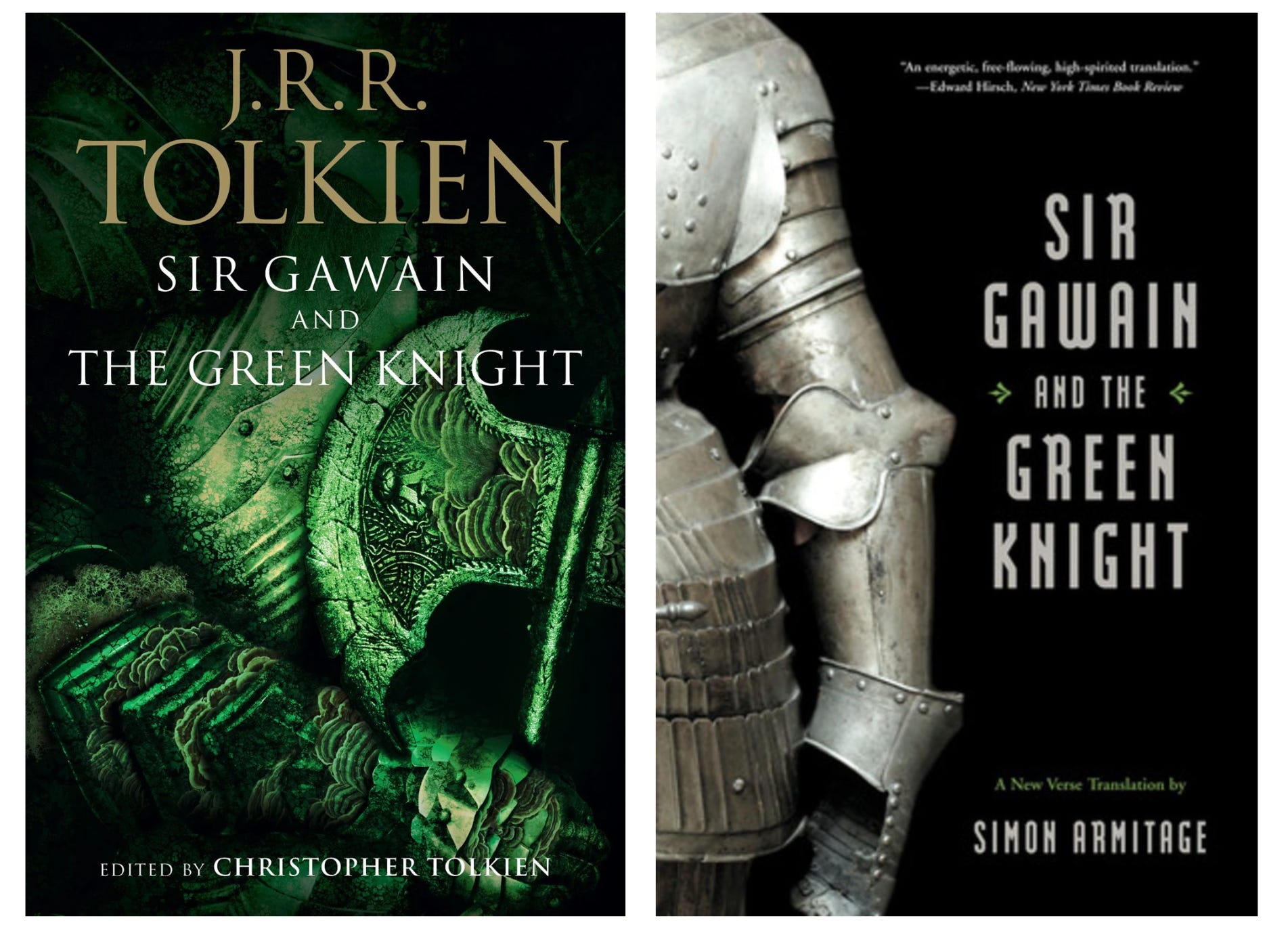
Sir Gawain and the Green Knight, translation and commentary by J.R.R. Tolkien; Sir Gawain and the Green Knight, translation by Simon Armitage
During a New Year’s Feast, a mysterious green knight appears in King Arthur’s court and throws down a challenge: any knight present can deal him a single blow with the Green Knight’s fearsome axe. In exchange the Green Knight gets to deal a blow of his own exactly one year later. Sir Gawain accepts the challenge and lops off his head with a single swing. The Green Knight calmly picks up his own head, mounts his green horse, and says (in the John Pattison translation), ”My turn. Come find me in one year.”
When Gawain rides out of Camelot twelve months later to keep his promise, many of his friends assume they’ll never see him again. The rest of the story tells not only of Gawain’s final confrontation with the Green Knight but of the trials and temptations that threaten to doom his quest.
I’m not qualified to judge which of the two translations I read in March is most faithful to the 14th-century original. I’ll admit my experience with Tolkien’s translation was colored by listening to the audiobook narrated by Monty Python’s Terry Jones. In the Armitage version, Sir Gawain’s temptations—Will he have an affair? Will he go willingly to his own execution? Will he hold still for the blow?—seem genuinely dire. There is real danger here. Those same events narrated by Terry Jones come across as droll rather than perilous.
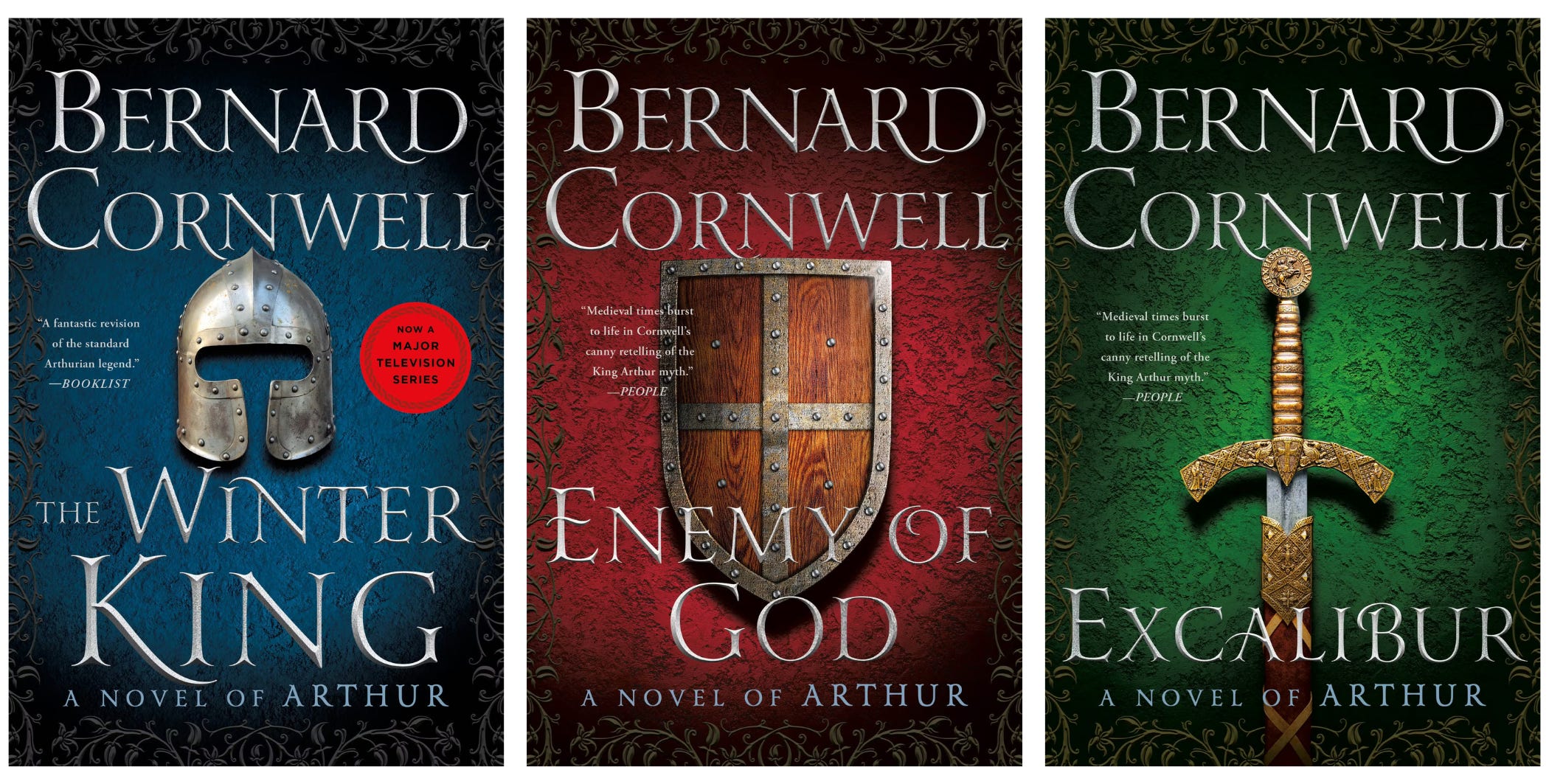
The Warlord Chronicles: The Winter King, Enemy of God, and Excalibur, all by Bernard Cornwell
Most modern books about King Arthur can be classified as either historical fiction or historical fantasy. Bernard Cornwell’s Arthurian trilogy, The Warlord Chronicles, is the former. The books are infused with mystery but not necessarily the supernatural. Merlin and Nimue are Druids here but it’s unclear whether they, their gods, or the new Christian God have any real power in Britain. Drawing primarily from Welsh and British sources that long pre-date Chrétien de Troyes or Thomas Malory, Cornwell presents Arthur not as king but as a warlord oath-bound to protect the kingdom of his half-brother Mordred. Arthur is honorable, patient, and loath to make war despite being very good at it. When he marries Guinevere—the one time he follows his heart rather than his duty—Britain is thrown into chaos.
Cornwell is one of my favorite storytellers.1 He knows how to make the ancient world come alive. He puts the “dark” in the Dark Ages. His Britain is cold, muddy, bloody, and brutal. The narrator of the series is Derfel Gadarn, an Anglo-Saxon orphan raised by Merlin who becomes a great warlord in his own right and a close confidant of Arthur. Derfel is based on the real St. Derfel who is said to have fought with Arthur at his final battle, later becoming a monk.
Yet as much as I loved The Warlord Chronicles, my experience reading them was marred by Cornwell’s cynicism. Perhaps because he was raised in a Protestant cult, Cornwell often presents Christians, and Christianity, in his novels as sniveling, hypocritical, money-grubbing, weak, and ineffectual.2 In these books, Merlin’s mortal enemies are Christians, and he speaks fondly of their grisly martyrdom in Roman arenas. It was a weird thing as a Christian to find myself rooting against Christians, and even for the pagan gods Merlin and Nimue are trying to coax back to Britain.
To the question, “Is nothing sacred?” Cornwell answers, “No.” The Round Table, for example. Since it was first described by the poet Wace in the mid-12th century, the Round Table has been Arthur’s way of preserving equality among his proud knights; not even the king himself is at the head of his own table. Not so in The Warlord Chronicles. Here the table is round because it’s easier to carry. The table gains fame but Merlin says he is “too old for such nonsense,” and Arthur and the narrator Derfel find the whole thing “embarrassing.” A drunken soldier throws up on the Round Table. Guinevere uses it in pagan sex rituals.
Reader, this series will remind you how much fun it is to get lost in a great epic story. But also, reader, beware. You may even come to hate beloved characters: Lancelot, for sure, and maybe even Guinevere.
Don’t get me wrong: every passionate King Arthur fan should read these books. Yet I feel bad for those introduced to the Arthurian legends through The Warlord Chronicles. Bernard Cornwell is one of my favorite living storytellers, but his cynicism tarnishes this otherwise brilliant series.
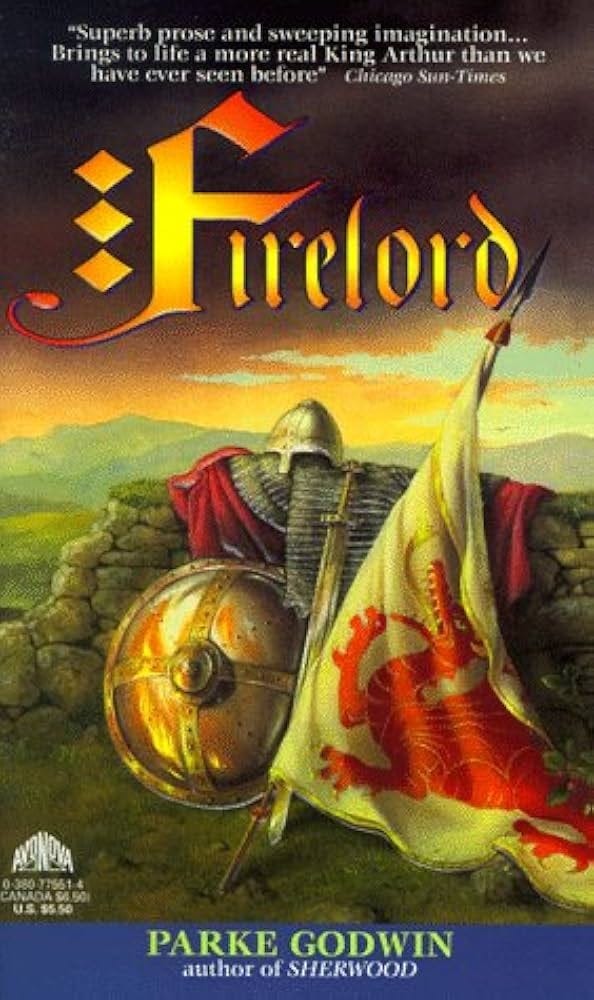
Firelord, by Parke Godwin
I wonder if Parke Godwin’s Firelord (1980) was the inspiration for The Warlord Chronicles (1995-1997). Cornwell and Godwin both make Dark Ages Britain come alive. In Firelord, though, Arthur is a man of two worlds—post-Roman Britain, and also Faerie. He lives for a time with the wild and nomadic Prydn people north of Hadrian’s Wall. Arthur is caught between two competing desires: the quiet satisfaction of ordinary family life with the Prydn, and his destiny as a warrior king. This sets the stage for his fateful confrontation with Mordred.
Parke Godwin, who passed away in 2013, is a spellbinding writer. Firelord manages to respect the Arthurian tradition while feeling completely original. Sadly, the book is out of print, but it’s absolutely worth tracking down at your library or used bookstore.
I was surprised to learn that Godwin was an American, and that got me thinking about why the Arthur stories resonate so deeply even for those of us outside the U.K. The day I finished Firelord, my oldest daughter found me in my recliner, staring off into the distance.
“Dad,” she said, “you’ve been melancholy all afternoon. Did something happen?”
“Yes,” I said. “Arthur went away to Avalon again.”
It gets me every time.
What are your favorite King Arthur books? Share your recommendations in the comments. My reading list is long but it can always get longer.
Cornwell’s 13-book Saxon Chronicles was the basis for the The Last Kingdom series on Netflix.
There are some notable exceptions, including his portrayal of King Alfred in The Saxon Chronicles.
Do check out Marion Zimmerman Bradley’s “The Mists of Avalon,” John! The Welsh Mabinogion is also lovely. I have both of you want to borrow.
I was also going to recommend Mists of Avalon! Amazing how some stories just resonate and endure and beg to be retold. I don't know why some do and some don't. Well, everyone wants that secret, and no one has it yet 😂😂😂